
Scaling feed industry rejects into valuable bio-based raw materials for construction applications
At Brightplus, industrial side streams are approached not as waste management challenges, but as potential raw materials for entirely new material applications.
The FF-Soili project is one example of how low-value industrial side streams can be transformed into scalable, high-value raw materials through green chemistry and industrial process development.
In many industrial processes, valuable materials are still treated as waste. They are burned for energy, releasing CO₂ into the atmosphere, or otherwise disposed of without capturing their full potential. Usually this is not because the material itself lacks value, but because there has not been a technically or economically viable way to utilize it differently.
At the same time, industries are under increasing pressure to reduce emissions, improve resource efficiency, strengthen supply security, and identify new sources of value within existing operations.
The FF-Soili project was built around one central question: could a low-value industrial side stream be transformed into a scalable, high-value raw material instead?
Rethinking industrial side streams
The project focused on inedible vegetable oil side streams originating from protein production in Finland, starting from soya been oil all the way to domestic turnip rape and rapeseed. Traditionally, these side streams have had limited economically viable applications and have mainly been used for energy production.
“The side-streams from protein production out of domestically grown turnip rape and rapeseed oil did previously not have substantial enough use in Finland, which would have been economically viable,” explains Henri Nieminen, CEO of Finnfoam.
The starting point for the project was to challenge the assumption. Instead of seeing the side stream as a waste management challenge, the project approached it as a potential raw material platform.
From waste to functional material
The goal was not simply to recycle the material, but to create something functionally and commercially meaningful from it.
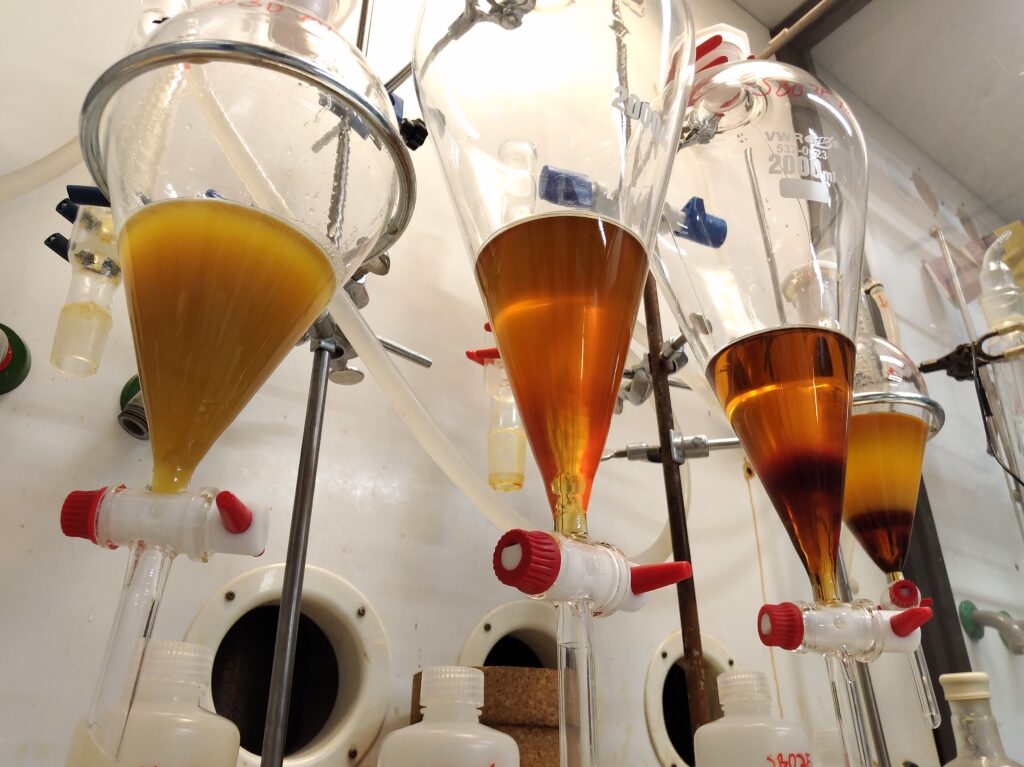
Through targeted chemical development, Brightplus created a process that enables the side stream to be refined into bio-based polyols, key raw materials used in polyurethane foams and insulation materials.
“Brightplus developed a chemical upgrading route to convert this side stream into a polyol-based raw material, enabling replacement of fossil-based components. By utilizing domestic raw materials locally, we avoid logistics dependency on benchmark hubs like Rotterdam, significantly improving cost efficiency and supply security,” Nieminen says.
Identifying the right end-use application was essential from the beginning. Without a clear industrial application, even technically successful materials remain disconnected from real value creation.
In this case, the application was found in construction and insulation materials, where polyurethane foams are widely used. These applications are not only commercially valuable, but also long-lasting, meaning the carbon contained in the material can remain stored for extended periods instead of being immediately released through incineration.
At the same time, the solution reduces dependency on fossil-based raw materials and offers an alternative to other bio-based inputs that may be expensive, limited in availability, or ethically challenging.
Scaling from laboratory to pilot production
Transforming a promising laboratory concept into an industrially relevant solution required systematic scaling work.
The development started at laboratory scale, where synthesis routes and reaction conditions were developed and validated. Small material batches were produced for application testing and performance evaluation.
From there, the process was gradually scaled into larger reactor systems ranging from 12 to 50 litres. This enabled improved control of pressure and temperature conditions and allowed production volumes sufficient for real application testing.
The resulting materials were successfully used in polyurethane foam production and tested in insulation applications. This phase was critical in demonstrating not only that the chemistry works, but that the material performs in its intended industrial use.
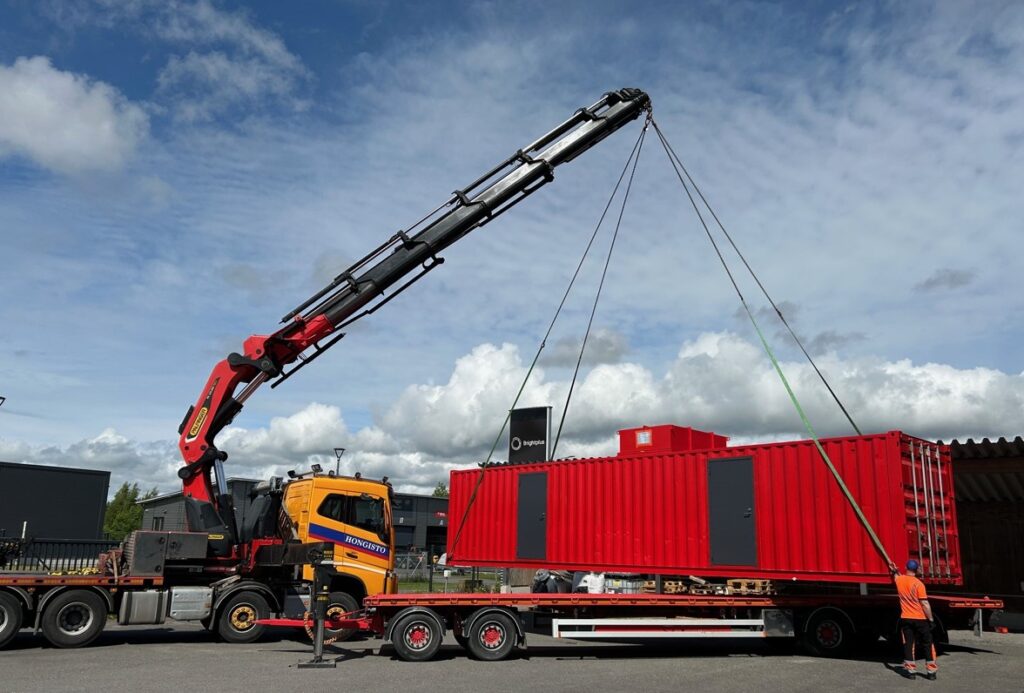
The next stage is pilot-scale production through a container-based minimill developed in Oulu. This represents another major step toward industrial-scale manufacturing and enables evaluation of process stability, scalability, efficiency, and commercial feasibility under realistic production conditions.
This type of phased scaling process is often where industrial innovation is ultimately proven, or fails.
From cost centre to scalable business opportunity
The impact of the transformation is substantial.
What was previously a low-value side stream used mainly for energy production can now function as a raw material in high-performance industrial applications. The value increase is significant, with the material achieving over 70 times higher value when refined into polyol-based chemical components.
“This enables the production of bio-based insulation materials and supports our strategic goal to increase the bio-based content of our products. Low-value side streams are upgraded into higher-value chemical components, turning a cost into a profitable, scalable business opportunity,” Nieminen summarises.
At the same time, the carbon is no longer immediately released into the atmosphere, but stored within long-life construction materials.
The feasibility of the solution was validated through testing, demonstrating that the material meets the performance requirements of the identified application and can function as a drop-in alternative within existing industrial systems.
Unlocking the hidden value of industrial side streams
Beyond the material itself, the partially Business Finland funded FF-Soili project demonstrates a broader industrial opportunity.
Many industrial side streams are currently underutilized not because they lack value, but because the right combination of chemistry, process development, scalability, and application understanding has not yet been applied to them.
By developing pilot-scale processes and validating industrial feasibility early, companies can significantly reduce the risk associated with scaling new biomaterial solutions and future biorefinery investments, as well as increase their self-sufficiency rate in their supply chain sustainably and transparently from local renewable biowaste-based raw materials.
More broadly, the project reflects a shift in perspective: industrial side streams should no longer be viewed merely as waste to manage, but as potential platforms for entirely new value creation.
Unlocking that value requires the ability to connect chemistry, process engineering, industrial scalability, and commercial application insight into solutions that work in real-world production environments.
This is where Brightplus focuses its work, transforming industrial side streams into scalable, high-value material solutions through green chemistry and practical implementation.
Could your side stream create more value?
If your industrial process generates side streams that are currently burned, disposed of, or underutilized, the key question may not be how to manage them, but what they could become.
In many cases, the difference between waste and valuable raw material is not the side stream itself, but the ability to identify the right application and develop a scalable process around it.
Brightplus works with industrial partners from early feasibility studies to pilot-scale implementation, helping transform side streams into scalable, high-value material solutions.
If this sounds relevant to your situation, let’s start a conversation.